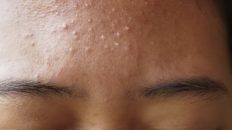
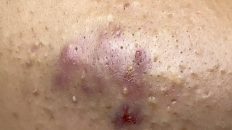
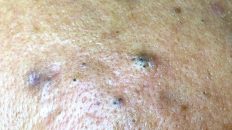
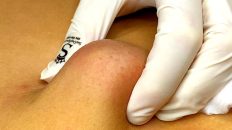
A lump under the skin can be worrying, but many of them turn out to be harmless cysts. The term “sebaceous cyst” is used for small, round bumps that sit just under the skin and slowly fill with a thick, cheesy material. Most of them are actually epidermoid cysts, but the name sebaceous cyst has stuck in everyday language.
How they form
A cyst forms when skin cells that should shed from the surface end up growing inside a small pocket under the skin. These cells keep producing keratin, a soft protein, and the pocket slowly fills up. Sometimes a blocked hair follicle or a small injury starts the process.
Many cysts have a tiny dark opening on top, called a punctum. This is the old pore that connects the cyst to the surface.
Where they appear
Cysts are most common on the face, neck, behind the ears, on the back, and on the chest. They can stay the size of a pea for years or slowly grow larger than a grape.
Signs of infection
A cyst that becomes red, warm, swollen, and painful may be inflamed or infected. It can also start to leak a yellow or foul-smelling material. At this stage it should be checked by a doctor, because an infected cyst sometimes needs to be drained and may need antibiotics.
Treatment options
Small cysts that do not bother you can simply be left alone. If a cyst keeps getting inflamed, grows, or is in a place that is irritated by clothing, a doctor can remove it. The most reliable method is to remove the whole sac wall. If part of the wall is left behind, the cyst often comes back.
Why you should not squeeze a cyst
Pressing a cyst at home can rupture the wall under the skin. The contents then leak into the surrounding tissue, which causes painful inflammation and a higher chance of scarring. Leave this to professionals, who use local anesthetic and sterile tools.
When to see a doctor quickly: if the lump grows fast, feels hard and fixed in place, bleeds, or if you have fever. These signs are uncommon with simple cysts, but they should always be checked.