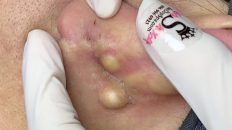
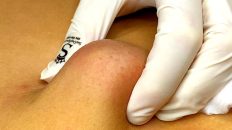
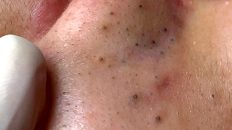
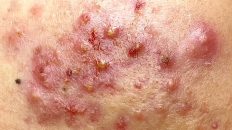
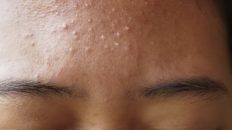
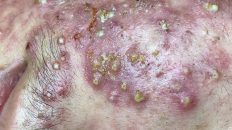
If you have small, hard, white bumps around your eyes or on your cheeks that never seem to go away, you may be dealing with milia. They are often mistaken for whiteheads, but they are something different and need a different approach.
What are milia?
Milia are tiny cysts filled with keratin, the same protein found in skin and hair. They usually measure one to two millimeters and feel firm, like a grain of sand under the skin. Unlike pimples, they are not red or inflamed, and they do not have an opening to the surface.
Who gets them
Milia are extremely common in newborn babies and usually disappear on their own within a few weeks. Adults get them too, most often around the eyes, on the eyelids, on the nose, and on the cheeks.
What causes them in adults
Heavy eye creams and rich moisturizers can contribute, because they slow down the normal shedding of skin cells. Sun damage, which thickens the outer layer of skin, is another common cause. Milia can also appear after skin injuries, burns, or certain cosmetic procedures as the skin heals.
Why squeezing does not work
Because milia are covered by a layer of skin and have no opening, squeezing them does not push them out. It only irritates the skin and can leave marks. This is the biggest difference from a regular whitehead.
How they are removed
A dermatologist or trained esthetician can remove milia by making a very small opening in the skin with a sterile needle or blade and then gently pressing the contents out. This takes seconds per bump and usually leaves no mark.
At home, regular use of a gentle retinoid or a mild exfoliating acid can help the skin shed more normally and make new milia less likely. Daily sunscreen and switching to lighter, non-comedogenic products around the eyes also help.
Milia are harmless, but if you have many of them suddenly, or they keep returning, it is worth asking a dermatologist to take a look.