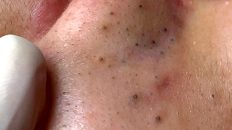
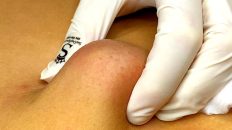
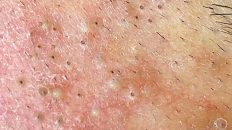
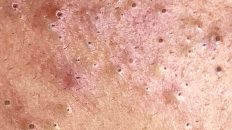
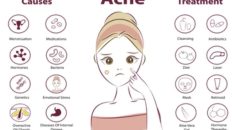
After a pimple heals, it often leaves something behind. Many people call all of these “scars”, but most are actually temporary marks that fade with time and the right care. Knowing the difference helps you choose the right treatment.
Red and dark marks
Red or purple marks (post-inflammatory erythema) are caused by small blood vessels that stay dilated after inflammation. Brown or dark marks (post-inflammatory hyperpigmentation) are extra pigment the skin produces after injury, and they are more common on medium and darker skin tones.
Both are flat. If you run your finger over the skin, you do not feel a dent. They usually fade over weeks to months.
True acne scars
True scars change the texture of the skin. Atrophic scars are dents: small, deep ice-pick scars, wider boxcar scars with sharp edges, and rolling scars that give the skin a wavy look. Raised scars (hypertrophic scars and keloids) are more common on the chest, back, and jawline.
How to fade marks
Daily sunscreen is the most important step, because sun exposure keeps marks dark for longer. Ingredients such as niacinamide, azelaic acid, vitamin C, and retinoids help even out skin tone. Gentle chemical exfoliants can speed things up. Be patient: most marks improve within three to six months.
How scars are treated
Texture scars do not go away with creams alone. Dermatologists use treatments such as microneedling, laser resurfacing, chemical peels, subcision, and fillers. Often a combination works best.
The best treatment is prevention
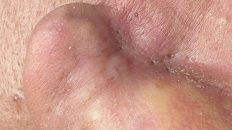
Treating acne early and not picking or squeezing pimples are the most effective ways to avoid scars in the first place. Professional extraction, done carefully, is very different from squeezing at home, as the videos below show.