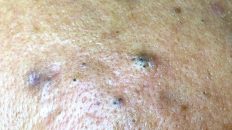
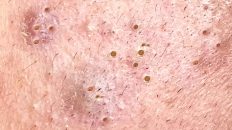
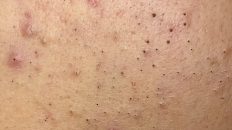
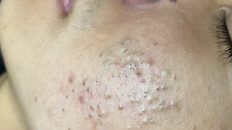
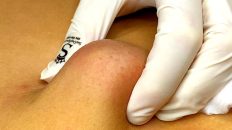
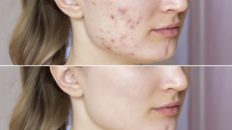
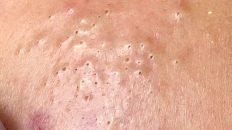
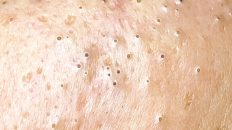
A boil is a painful, pus-filled lump that forms around a hair follicle. When several boils join together or an infection collects deeper under the skin, it is called an abscess. Both are caused by bacteria, most often Staphylococcus aureus.
What a boil looks like
A boil starts as a tender red bump. Over a few days it grows, becomes firmer, and fills with pus. A yellow or white tip often forms in the center. Boils are most common on the neck, face, armpits, buttocks, and thighs, where there is friction and sweat.
Why they happen
Bacteria that normally live on the skin can enter a hair follicle through a small cut, an ingrown hair, or irritated skin. People with diabetes, a weak immune system, or close contact with someone who has skin infections are at higher risk.
What you can do at home
Small boils often heal on their own. Apply a warm, moist compress for 10 to 15 minutes several times a day. This helps the boil come to a head and drain naturally. Keep the area clean and covered, and wash your hands after touching it.
Do not squeeze or cut a boil yourself. This can push the infection deeper or spread it to other areas.
When to see a doctor
See a doctor if the boil is larger than about two centimeters, very painful, on the face, or not improving after a week. Get help quickly if you have fever, if red streaks spread from the area, or if new boils keep appearing.
A doctor can numb the area and make a small cut to drain the pus safely. This brings fast relief. Antibiotics are sometimes added, especially for larger infections.
The videos below show how professionals clean and drain large, inflamed bumps under sterile conditions.