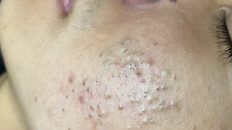
Whiteheads and blackheads are the two most common types of acne, and almost everyone has had both at some point. They look different, but they start in exactly the same way: a pore becomes clogged with oil (sebum) and dead skin cells. The only real difference is what happens at the top of that clogged pore.
What is a blackhead?
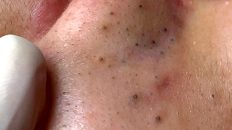
A blackhead is an open comedone. The pore is clogged, but its opening stays wide open to the air. When the oil and skin cells inside meet oxygen, they oxidize and turn dark. That is why the tip looks black or grey. It is not dirt, and scrubbing harder will not wash it away.
Blackheads usually appear on the nose, chin, forehead, and on the back and shoulders, where oil glands are larger and more active.
What is a whitehead?
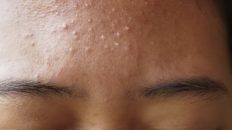
A whitehead is a closed comedone. The same plug forms inside the pore, but a thin layer of skin grows over the opening. Because the contents are not exposed to air, they stay white or skin-colored. Whiteheads look like small, firm bumps and are often harder to remove than blackheads.
Why both happen
Hormones play a big role. Androgens increase oil production, which is why acne often starts in the teenage years and can flare around periods, stress, or certain medications. Heavy creams, oily hair products, and sweat that sits on the skin for a long time can also make clogged pores more likely.
How to treat them
Products with salicylic acid help dissolve the oil plug from inside the pore. Retinoids (such as adapalene) speed up cell turnover so pores do not clog as easily. Benzoyl peroxide is more useful when red, inflamed pimples are present as well.
Results take time. Most treatments need six to eight weeks before you see a clear difference, so it is worth staying consistent rather than switching products every few days.
Should you squeeze them?
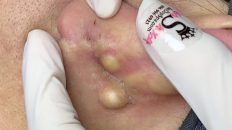
Squeezing with fingers pushes bacteria deeper and can turn a simple comedone into an inflamed pimple or even a scar. Professional extraction is different: a trained therapist softens the skin, uses sterile tools, and applies even pressure around the pore so the contents come out cleanly. The videos below show how carefully this is done in a professional setting.