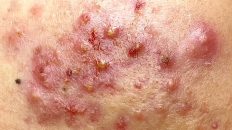
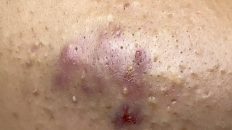
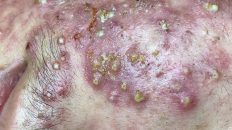
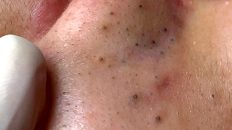
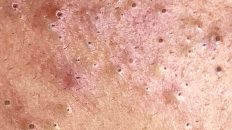
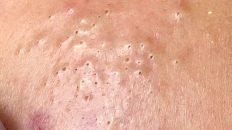
Ingrown hairs are small, often itchy bumps that appear after shaving, waxing, or plucking. They are very common, especially in people with curly or coarse hair, and they can look a lot like pimples.
What is an ingrown hair?
Normally a hair grows straight up and out of the follicle. An ingrown hair curls back into the skin or grows sideways under the surface instead. The body treats the trapped hair as a foreign object and reacts with redness, swelling, and sometimes a small pus-filled bump.
Common places
The beard area and neck in men, the bikini line, the legs, and the armpits are the usual spots. Anywhere you remove hair regularly can be affected.
Why they happen
Shaving cuts the hair at a sharp angle, which makes it easier for the tip to pierce the skin as it grows back. Shaving too closely, stretching the skin while shaving, and using a dull blade all increase the risk. Dead skin cells can also cover the follicle opening and trap the hair underneath.
How to prevent them
Use a sharp, clean razor and shave in the direction the hair grows. Avoid pulling the skin tight. Soften the hair first with warm water and a gentle shaving gel. Rinse the blade often.
Gentle exfoliation two or three times a week helps keep the follicle openings clear. Products with salicylic acid or glycolic acid can help if you are prone to ingrown hairs.
What to do if you already have one
Apply a warm compress for a few minutes to soften the skin. Often the hair will work its way out on its own. If you can clearly see the loop of hair on the surface, it can be gently lifted with a clean, sterile needle or tweezers, but do not dig into the skin.
If the bump becomes very painful, larger, or keeps coming back in the same place, it can turn into a cyst or infection. In that case it is better to let a professional look at it. Professional extraction is shown in the videos below.