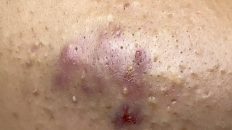
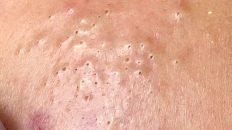
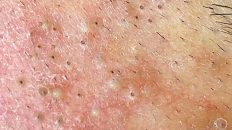
Many people look closely at their nose and see dozens of small grey or dark dots. Most assume these are blackheads. Very often, they are actually sebaceous filaments, a normal part of healthy skin.
What are sebaceous filaments?
Sebaceous filaments are thin, hair-like columns of oil and skin cells that line the pores. They help guide oil to the surface. Everyone has them, and they are most visible on the nose, chin, and forehead, where pores are larger.
They look like small, evenly spaced grey or tan dots. If you squeeze them, a thin white or yellow thread comes out, and within a few weeks the pore fills up again. This is normal.
What are blackheads?
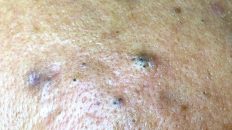
A true blackhead is a pore that is clogged with a firmer plug of oil and dead skin. The top is open to the air and turns dark. Blackheads are usually bigger, darker, and less evenly spaced than sebaceous filaments, and they can slowly stretch the pore.
Why it matters
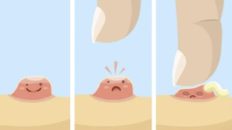
Trying to squeeze every sebaceous filament out of your nose only irritates the skin and can enlarge the pores. Since they always come back, it is a battle you cannot win, and you do not need to.
How to make both less visible
Use a gentle cleanser twice a day. A salicylic acid product (BHA) a few times a week helps dissolve oil inside the pores. A retinoid at night keeps pores clearer over time. Clay masks can absorb surface oil before an event.
Pore strips remove the top of filaments and blackheads for a few days, but they can be harsh on sensitive skin. Use them rarely, if at all.
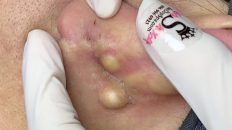
For real blackheads that are deep and stubborn, a professional facial with extraction is the safest option. The videos below show how professionals clean out blackheads around the nose and face.